Bolivia: one of the world's rarest coffee origins

Limited and quality coffee production at high altitude.
Bolivia is a landlocked country located in the center of South America, bordering Brazil, Argentina, Paraguay, Chile and Peru. The topography of the country is mountainous, with the capital La Paz at 3,500 meters, being the highest capital in the world. Its 12 million inhabitants belong to a mosaic of populations, as they are made up of indigenous people, mixed people, descendants of the Spanish conquistadors and immigrants from other South American countries.
Located within the "coffee belt" and with an ideal climate for coffee cultivation, Bolivia is among the coffee-producing countries, although it is certainly not a "strong player" in the market. Quality, rare and sought after by connoisseurs, Bolivian coffee deserves our attention.
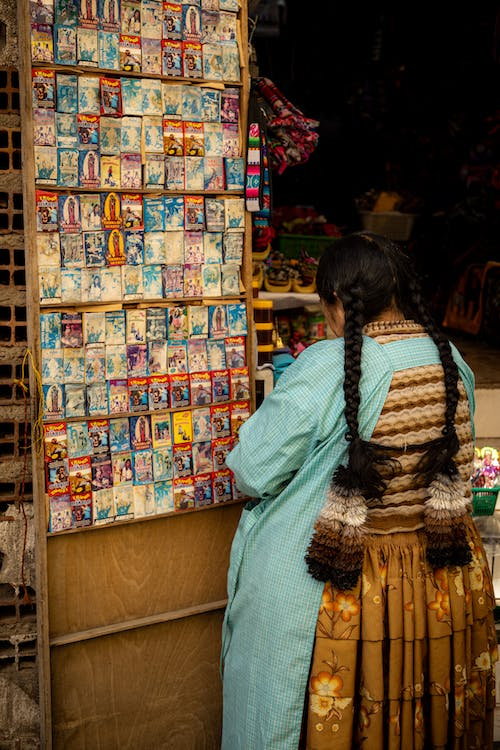 Brief history of coffee in Bolivia
Like many other South American countries, Bolivia was for many years a Spanish colony, after its independence was won in 1825. Coffee as a crop was introduced to the country in the late 18th century by Spanish colonists in the Yungas region, a fertile, tropical plateau on the eastern slopes of the Bolivian Andes.
Despite the ideal climate of the region, the cultivation of coffee in the country was not particularly developed, with the result that the small production is available mainly to the upper economic strata of the country and less to exports. The first substantial changes would take place at the beginning and mainly in the first half of the 20th century, with a series of agrarian reforms that tried to stimulate the coffee production sector, as it gave the right to landless natives to cultivate their own estates for the first time, planting coffee trees.
Little by little, and following this direction, the Bolivian state continued to develop coffee production in new areas besides the Yungas, such as Caranavi, while emphasizing the development of exports.
Today, coffee production in Bolivia remains limited, but most producers (whether indigenous Bolivians or indigenous cooperatives) have focused on quality over quantity, resulting in Bolivian coffee being in demand in the specialty coffee market, while the limited his production makes him even more sought after. Producers face various challenges, such as price volatility, the country's mountainous terrain that makes transportation difficult, local communities turning to the more lucrative coca crop, but the situation certainly now inspires stability and optimism.
What does Bolivian coffee taste like?
Bolivian coffee is related to the Arabica coffees of the neighboring countries. Being a country of high altitude, tropical forests and heavy rainfall, Bolivia has an ideal microclimate for growing coffee. Typically, Bolivian coffees have a fruity character, with notes of chocolate and nuts, not excluding aromas of caramel and honey.
Typically, most Bolivian coffees are marketed as single varietal options, as production is limited, making their availability in the specialty coffee market more beneficial to producers. It is not rare to come across micro-lot selections of Bolivian coffee, which is the best opportunity for us to get to know the flavors and aromas of Bolivian coffee.
A purchase proposal for authentic Bolivian Coffee!
Ingagi Bolivia El Paraiso 250g σε κόκκους: Single origin, Micro - Lot 100% Arabica coffee from Bolivia, from the El Paraiso farm at 1600 meters. El Paraiso is a farm with extremely limited and therefore incomparably high quality production. The coffee trees belong to the unique Red Caturra variety and give a complex, multi-layered coffee with a fruity character and balanced acidity. A truly rare and Limited espresso for those looking for something different.
If you also think that coffee takes us on a journey, then Bolivian coffee takes us to the heavens – at 3500 meters, on the slopes of the Andes!


