What is the intensity of a coffee and what factors it is depended on?

About tension and other demons ...
When we are faced with the choice of the next blend that we will try, we will have noticed that most coffee packages have some special markings, in order to better inform us. These signs usually refer to the body, the acidity, the sweetness, and of course the "intensity".
But what exactly is the infamous "intensity" of a blend? We try to explain this feature in simple words, but also to dispel some misunderstandings around it!
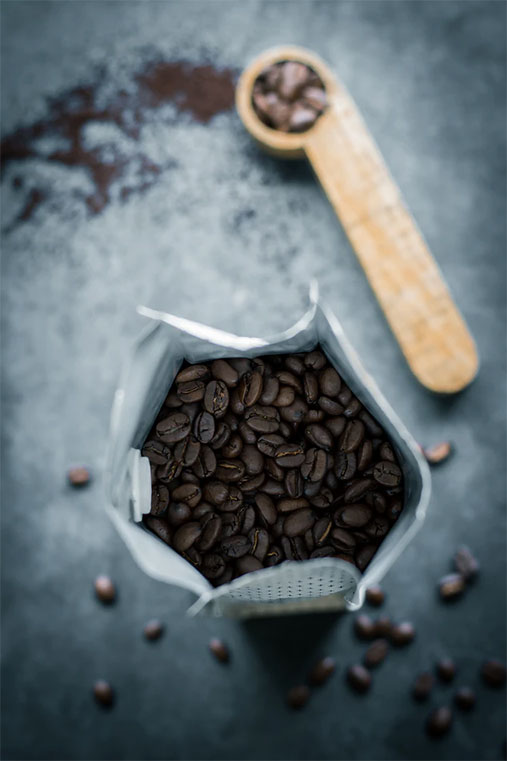 What exactly is the intensity of coffee?
The term "intensity", when describing a blend of coffee, refers mainly to its overall character. With the term intensity we try to describe how rich and how intense the aroma of coffee is, always in combination with its "body". This is a definition that is relatively difficult to describe in detail in words, but that can nevertheless be understood relatively easily by anyone who has a relevant experience in the field of coffee and has tried.
"Intensity" is one of the most difficult quantities to measure, in terms of the taste profile of coffee. This is due on the one hand to the fact that subjectivity is very strong and personal taste plays a decisive role, and on the other hand to the fact that in order for a blender to decide the intensity of a blend it creates, it takes into account different factors, which are not always objective.
What does the intensity of coffee depend on?
As for the overall character of the blend, and individual characteristics such as aroma and body, the intensity of a blend depends on many factors. Initially, the intensity is related to the ratio of Arabica and Robusta that a blend has, with the increased presence of Robusta generally increasing the intensity. Also, the individual varieties used, as well as the country of origin, but also the ratio between them, affect the intensity of a coffee blend. Of course, the degree of roasting also plays a role, with the most roasted blends being considered, in general, blends of greater intensity.
How do you measure the intensity of coffee?
In espresso blends on the market, the intensity is usually measured on a scale of 5, 10 or 12, with the main purpose of informing consumers about the character of each blend. It is important to emphasize that this categorization is of course indicative, is not subject to any international standard and can differ significantly from company to company, while the personal taste bud makes things even more complicated. It is not unlikely that a blend with an intensity of "5" looks to someone less "intense" than a blend of equal intensity from another company.
In general, and using the scale of 10, which is used by several coffee companies, we can expect the following characteristics from an espresso blend, depending on the indicated volume:
1 - 4: light body, delicate aroma
5 - 7: balanced coffee, rich in aroma
8 - 10: coffee with a strong body and a particularly strong aroma.
Does higher volume mean more caffeine?
Although some factors that affect the intensity of the coffee, such as the presence of Robusta in the blend or the varieties included, affect the caffeine content of a blend, the intensity does not necessarily mean a higher caffeine content. The association of intensity with the strength of coffee is one of the most well-known misunderstandings in the world of coffee. While the intensity simply describes the coffee's taste profile, precisely because of its taste characteristics, it tends to be confused by many coffee lovers with the caffeine content, which generally does not correspond to reality.
So, while in general some high-intensity blends may indeed be louder than others of lower intensity, this is not the rule and you should of course not take into account if what we are interested in when buying a coffee is its content in caffeine.
Sweet coffees, strong, low or high intensity, single variety or in blends, everything is a matter of personal taste. Good coffee is always important, the coffee we deserve!
Coffee Caipirinha: taste Brazil in a glass

The most popular Brazilian cocktail meets Brazilian coffee.


What coffee should I choose to prepare Cold Brew?

A mini guide to always make our Cold Brew as we like it.
Iced Coconut Latte, light and refreshing!

Give a tropical, exotic note to your daily enjoyment
Είναι ο στιγμιαίος καφέςIs Instant Coffee Bad for Human Health?κακός για την ανθρώπινη υγεία;

We restore the reputation of the great "pariah" of the coffee family.

Home made Espresso Frozen Yoghurt with simple ingredients.

The popular yogurt dessert acquires a coffee aroma.
Constuct your own custom made knock box!

Όποιος αγαπά τις κατασκευές και τον espresso, βρήκε τι θα κάνει το επόμενο Σαββατοκύριακο!
Light Chocolate Mosaic with espresso flavors

Enjoy without regrets, with a favorite childhood sweet in an adult version.
Should I prefer dark or light roasted coffee?

Roasting is responsible for a large percentage of the taste of coffee.
4 + 1 Coffee Ice Cream Recipes from Coffees.gr archives!

Let's prepare for a summer full of coffee aromas.
What do you need for a homemade Freddo Espresso?

We are preparing our counter for delicious iced coffees!
It's the coffee of the Greek summer, our "national" coffee, the favorite habit as soon as the temperature exceeds 25 degrees Celsius! The reason, of course, is Freddo Espresso and his cousin, Freddo Cappuccino, who almost monopolize the interest of coffee makers during the summer months.
Although many argue that making Freddo Espresso at home is not an easy task, the truth is that with the necessary equipment and a little practice, we can prepare Freddo that the best barista would envy. Before we start hitting with the shaker, we gather on our counter what we need for an enjoyable Freddo Espresso or Freddo Cappuccino!
What do you need for a homemade Freddo Espresso?
 A good espresso blend: As with any coffee, the one that ultimately counts best is the good blend. By choosing a quality, aromatic espresso blend, we have laid the foundations to enjoy an enjoyable, iced coffee.
Choosing the right blend is, of course, primarily a matter of personal taste, but we can't overlook the fact that a major problem with Freddo Espresso or Freddo Cappuccino is the feeling of "watering", which comes from melting ice. This can be avoided by choosing blends with a Robusta content of at least 30-40%, which will give our coffee a strong and robust body. Espresso blends such as Lavazza Tierra Brasile Intense, Lavazza Super Crema or Buondi Premium are very fragrant, however they keep their body in cold preparations very satisfactory.
However, if we love intense acidity and floral or fruity aromas, we can of course experiment with 100% Arabica blends, which will give lighter Freddo. Illy Classico's favorite blend, but also options like Hausbrandt Gourmet or Lavazza Tierra are ideal choices for those who want to experiment with 100% Arabica Freddo Espresso!
An espresso machine: Of course, in order to extract our espresso, it is necessary to have an espresso machine. In this part, there are no restrictions. Any machine, no matter how much coffee works, can give us good coffee, as long as it is functional and always thoroughly cleaned. We avoid hitting Lungo extracts, as the result will be quite diluted. It is better to use two single espresso, for a more concentrated and intense taste.
A good, reliable shaker: hitting the hot espresso with ice is crucial to Freddo's success. Every amateur or professional barista needs a shaker that is quality, ergonomic and suitable for hitting Freddo. We prefer metal shakers, as due to their construction material they transfer the temperature more evenly, freezing our coffee more efficiently and in less time. It is important that the shaker is made of good materials, such as stainless steel, does not break easily and has an internal strain er that will keep the pieces of ice from melting.
A Shaker like the Feggrini Shaker, designed to make Freddo, is an ideal solution for any beginner or advanced home barista, but also an ideal gift for any coffee lover.
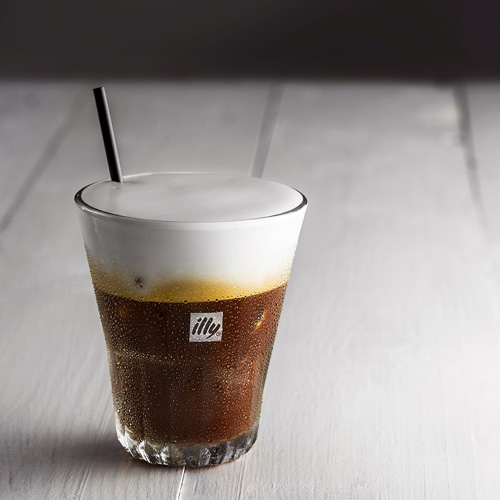 A touch of ice: Freddo Espresso and Freddo Cappuccino are created when we hit the hot espresso with ice. The amount of ice should not be too much, but as much as needed to freeze our coffee, without "watering" too much. Pay attention to the quality of the ice: of course it must be of excellent quality water, ideally with the same water I use to extract the coffee. If the water in our living area is not good and we usually drink bottled water, then we should definitely prepare ice from bottled water, as tap water will affect the taste of our coffee.
A little bit of milk foam: Milk Foam is only necessary if we want to prepare Freddo Cappuccino. Although the most effective way to prepare frothed milk is with the relevant device, the mlik froather, there are ways to prepare our frothed milk at home and in other, easier ways. Foam milk requires technique and practice, but it is something that is relatively easy to master. Chopped chocolate or cinnamon is purely optional!
Tip: Foam milk is created infinitely easier if the milk we use is long lasting and not fresh, especially if it is whole fat and not light.
Glass and Straws: Serve your Freddo in the right glass and of course always with straw (ideally biodegradable, in order to reduce our environmental footprint). It's a fact that others prefer the tall glasses for their Freddo, while many prefer the short ones - it's purely a matter of taste, but also a matter of available tableware. In general, avoid plastic cups and prefer glass, transparent, special glasses for Freddo.
Freddo Espresso is always synonymous with summer and is always enjoyable: in a shady cafe, in hand waiting, on the lounger of a beach bar or even at home, made by our little hands! Have a happy summer!
Marrying aperitif with coffee, with an Espresso Spritz!

Two favorite Italian habits in a delicious drink!
Coffee processing: old and new methods, present, past and future!

The processing of the "coffee cherry" is crucial for its taste.

Impressive Boba Coffee with coffee pearls!

A Master Chef inspired coffee that will impress your friends.
How did espresso conquer the entire European continent?

The coffee that unites all the coffee lovers in the world!
Thick & Creamy Iced Coffee, full of whipped cream & Baileys!

A rich and filling coffee for the afternoon cravings.


